News
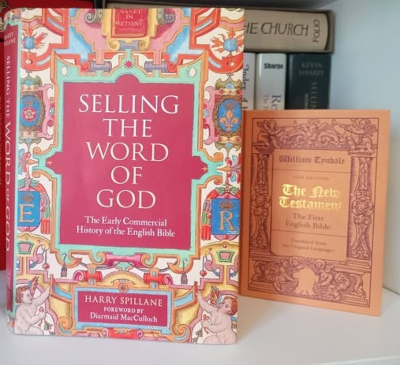
On 24th September 2026, the Bodleian Library released the new book by Tyndale Society member Dr Harry Spillane. The book is called "Selling the Word of God - The Early Commercial History of the English Bible".
This book traces the story of the printed Bible from the first printed New Testament in English of 1525 to the much celebrated King James Bible of 1611. It is for sale for £25. (Tyndale Society members get a 20% discount; see publisher discounts.)
To purchase the book from the Bodleian Libraries bookshop, follow the link below.

During the period from 15th to 17th September, a group of fifteen Bible Society staff and supporters walked the Tyndale Trail, from his sculpture in Bristol to his monument in North Nibley.
The venture was a twenty-six mile sponsored walk which raised over £5,000 for the Bible Society. The tour guide along the way was the Chairman of the Tyndale Society who explained the relevance to the story of William Tyndale of places on the route at Bristol, Iron Acton, Wotton-under-Edge and North Nibley. The walk ended at North Nibley chapel where the group had refreshments and could see their Tyndale exhibition.
For more information and a video click on the link below:
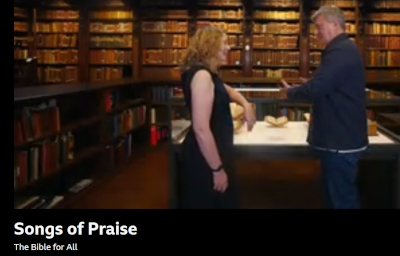
Songs of Praise is BBC 1 Television's weekly religious programme, which has been running since 1961, making it the world's longest continuously running, religious television programme. It features uplifting stories of faith with interviews and music from around different types of churches.
On Sunday 13th September 2026, Songs of Praise featured a very good special programme to mark the five hundredth anniversary of Tyndale's New Testament, featuring the copy at St Paul's Cathedral and an interview with Dr Paule Gooder. You can watch it on BBC iPlayer using the link below. The programme lasts half an hour.
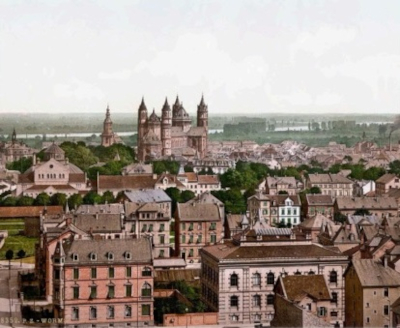
Worms is the city on the River Rhine in western Germany where, in 1521, Martin Luther was declared a heretic at the wonderfully named Diet of Worms. Just five years later, it was the city where Tyndale's English New Testament was published five hundred years ago in 1526.
St Albans in Hertfordshire has been twinned with Worms since 1957, and there will be a number of events in St Albans to commemorate the Tyndale 500 anniversary. Tim Boatswain, a friend of the Tyndale Society, published an article in the St Albans Times which tells the story. You can read the article using the link below.
For details of the events in St Albans, please follow the links below.

The story of churches marking the 500th anniversary of William Tyndale's New Testament was featured in the Christian Today online journal recently. The article was written by the Chairman of the Tyndale Society and explained about events, exhibitions and conferences which are being staged across the land to mark the quincentenary.
Follow the link below to read the article.